
 0494 379 504

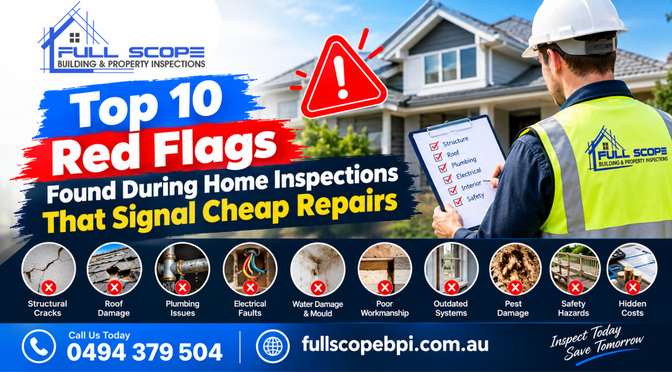
Buying a home is one of life’s biggest decisions. Many homebuyers overlook the importance of thorough inspections. Poor quality repairs can hide beneath fresh paint and cosmetic updates. Understanding these warning signs helps protect your investment significantly.
Why Red Flags Matter During Property Inspections
A home inspection in Melbourne reveals what the naked eye cannot see. Cheap repairs often fail within months of purchase. Identifying these issues early saves you thousands in future repairs.
Top 10 Red Flags Indicating Poor Quality Work
1. Mismatched Caulking and Sealant
Uneven or discoloured caulking suggests rushed repair work. Quality repairs use consistent, professional-grade materials throughout. This indicates corners were cut significantly.
2. Patchy Roof Repairs
Roof patches that don’t match original materials signal cheap fixes. Multiple colours or layers suggest temporary band-aid solutions. This requires immediate professional attention.
3. Unprofessional Paint Jobs
Dripping paint, uneven coverage, and poor preparation indicate hasty work. Quality painting involves proper surface preparation and multiple coats. This impacts both aesthetics and protection.
4. Loose or Misaligned Fixtures
Wobbly door handles, loose light switches, and crooked tiles show poor installation. A building and pest inspection in Melbourne catches these details easily. Professional work ensures everything sits level and secure.
5. Sagging or Uneven Flooring
Floors that dip or slope unevenly suggest structural concerns. Cheap repairs ignore underlying problems beneath the surface. This requires investigation by qualified inspectors.
6. Visible Gaps Around Doors and Windows
Gaps around frames indicate poor fitting and weak weatherproofing. Quality installations seal these completely to prevent water damage. This causes drafts and higher energy bills.
7. Mismatched or Outdated Electrical Work
Different wire gauges, unmarked circuits, and outdated outlets suggest unprofessional work. Safety concerns arise from inconsistent electrical standards. A new home inspection in Melbourne identifies these hazards.
8. Crude Plumbing Repairs
Visible patches, corrosion, and jury-rigged connections indicate temporary fixes. Quality plumbing uses proper fittings and materials throughout. Water damage risks increase significantly with poor workmanship.
9. Cracked or Poorly Patched Drywall
Large cracks, visible tape, and uneven surfaces suggest inadequate repairs. Professional wall repairs are smooth and seamless. This often conceals deeper structural issues.
10. Poor Grout Work and Tile Installation
Cracked grout, uneven tiles, and gaps indicate hasty bathroom or kitchen work. Quality tiling requires precision and proper materials. Water seepage behind tiles causes expensive problems.
Why Professional Inspections Matter
A home buyer’s inspection in Melbourne prevents costly surprises later. Trained inspectors identify problems homebuyers miss completely. They understand construction standards and building code requirements.
How to Protect Yourself
Request detailed inspection reports highlighting all defects. Ask about repair recommendations and estimated costs. Negotiate with sellers based on professional findings.
Conclusion
Cheap repairs compromise your home’s safety and longevity. Identifying red flags early protects your investment substantially. Don’t skip thorough inspections before purchasing property.
For comprehensive assessments, consider expert new home inspection services. Full Scope Building & Property Inspections provides thorough, professional evaluations. Our team identifies issues that others miss completely.
Contact Full Scope Building & Property Inspections today:
- Phone: 0494 379 504
- Email: info@fullscopebpi.com.au
- Website: https://fullscopebpi.com.au/
Ensure your home purchase is protected by experts who care.
FAQs
1. What are the most common cheap repairs homebuyers miss?
Mismatched caulking, unprofessional paint jobs, and loose fixtures are frequently overlooked. Professional inspectors catch these details systematically.
2. How can I identify poor-quality electrical work during inspections?
Look for different wire gauges, unmarked circuits, and outdated outlets. Inconsistent standards indicate non-professional installation work.
3. What does sagging flooring indicate about a home?
Sagging floors suggest potential structural issues beneath the surface. This requires immediate investigation by qualified professionals.
4. Why is proper caulking important in home inspections?
Quality caulking prevents water damage and ensures weatherproofing effectiveness. Mismatched or uneven caulk signals rushed repair work.
5. How do I spot poor plumbing repairs?
Visible patches, corrosion, and jury-rigged connections indicate temporary solutions. Professional repairs use proper fittings consistently throughout.
6. What should I look for in roof repairs?
Roof patches matching original materials indicate quality work professionally. Multiple colours or layers suggest problematic temporary fixes.
7. Can poor tile installation cause water damage?
Yes. Cracked grout and gaps allow water seepage behind tiles. This causes expensive structural damage if left unaddressed.
8. Why are gaps around windows and doors concerning?
Gaps indicate poor fitting and weak weatherproofing standards. They cause drafts, water infiltration, and increased energy costs.
9. What does uneven drywall patching suggest?
Visible tape and uneven surfaces indicate inadequate repair work. This often conceals deeper structural problems in walls.
10. How important is a professional home inspection?
Professional inspections prevent costly surprises after purchase. Trained inspectors identify problems homebuyers typically miss completely.

